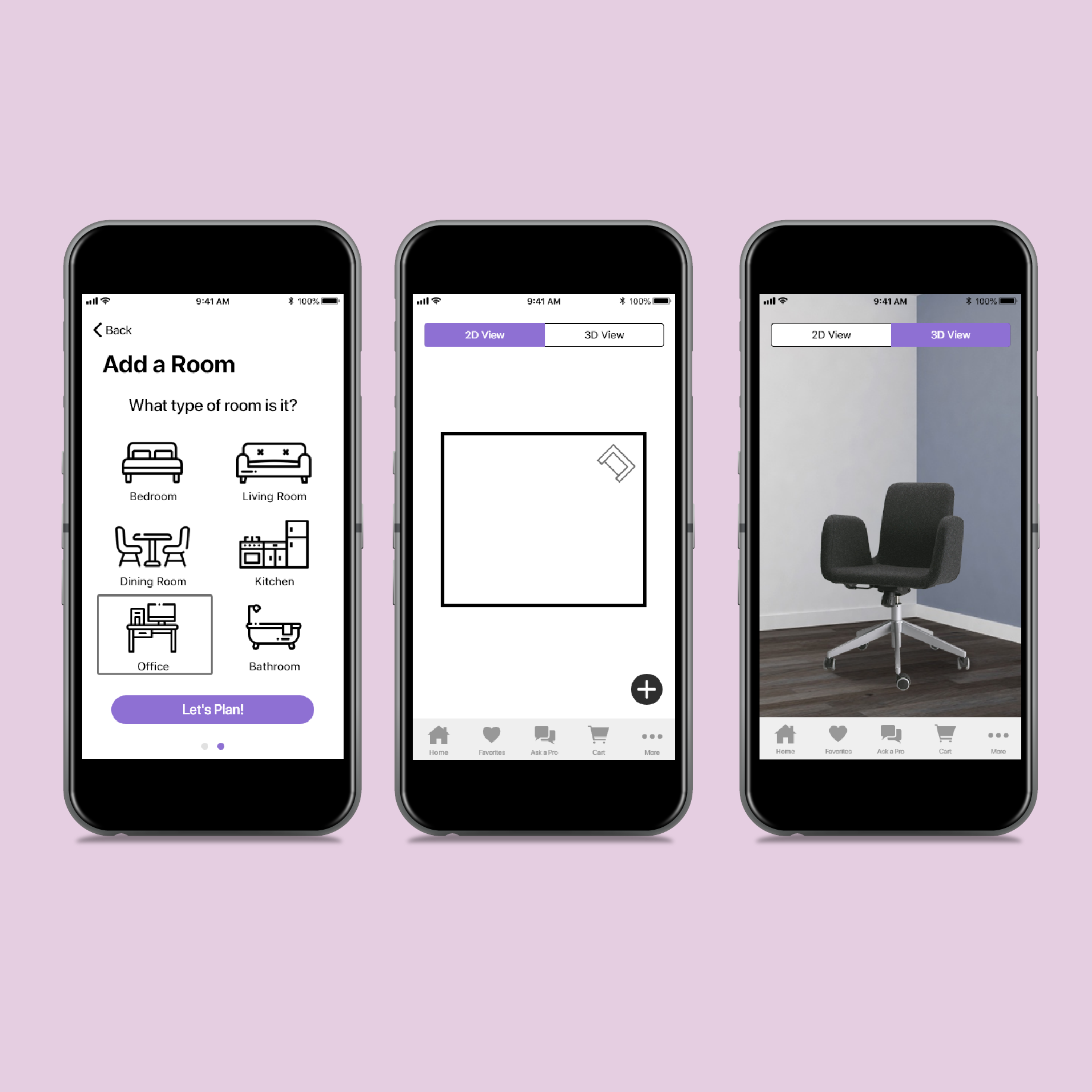
Two-week partner project to create and develop an app that addresses the daily needs of users.
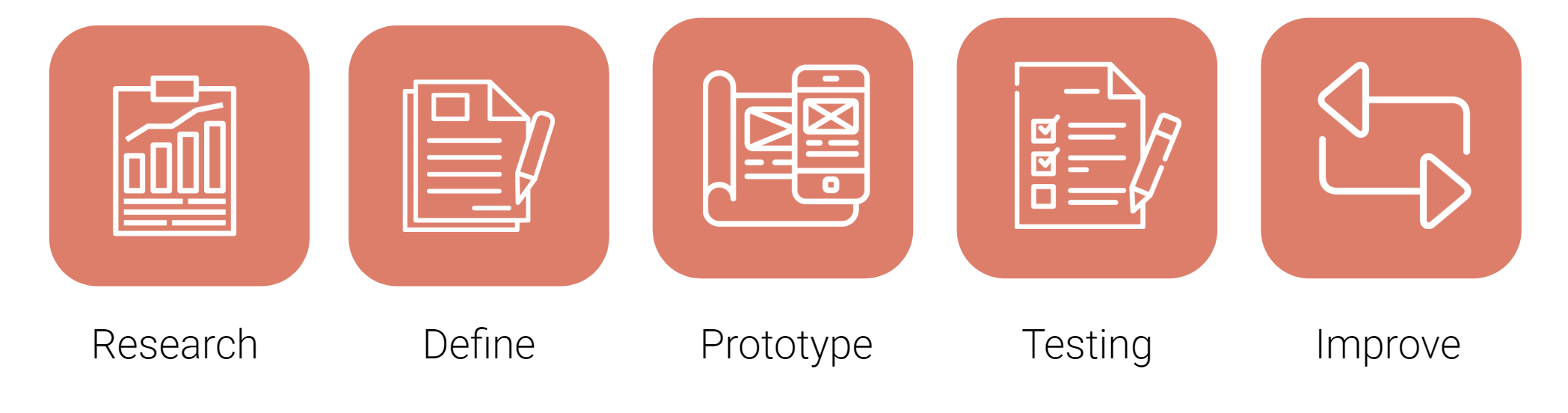
To create Inhance, we followed the design process overview as below, consisting of user research to empathize with our potential users, defining the focus of the product, prototyping and testing the app,and consistently improving it.
In order to figure out what our users need, we conducted research through interviews and surveys.
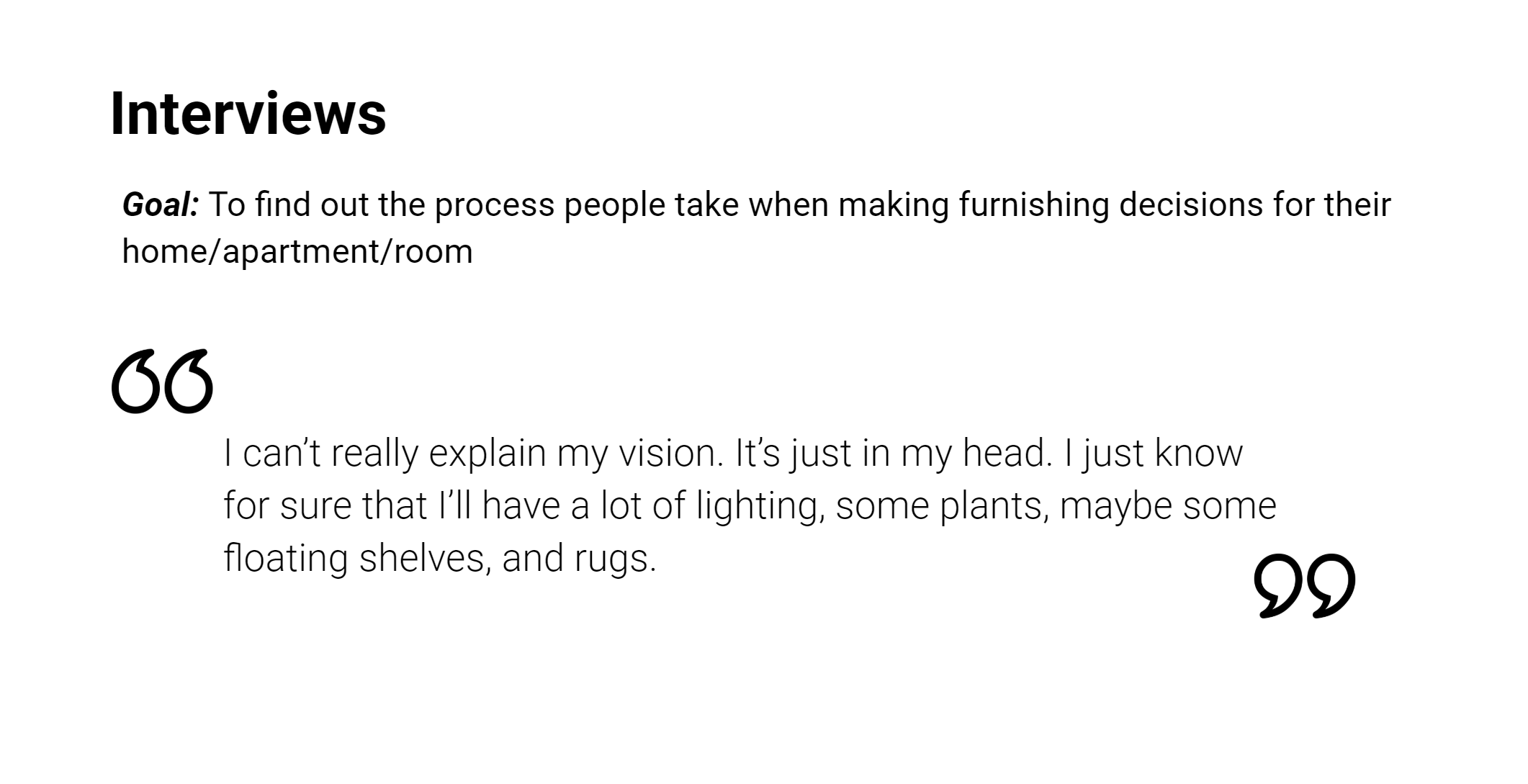
After processing around 6 interviews, it was evident that a recurring conflict for people is that they have a general vision for their homes,but it is difficult to physically execute it
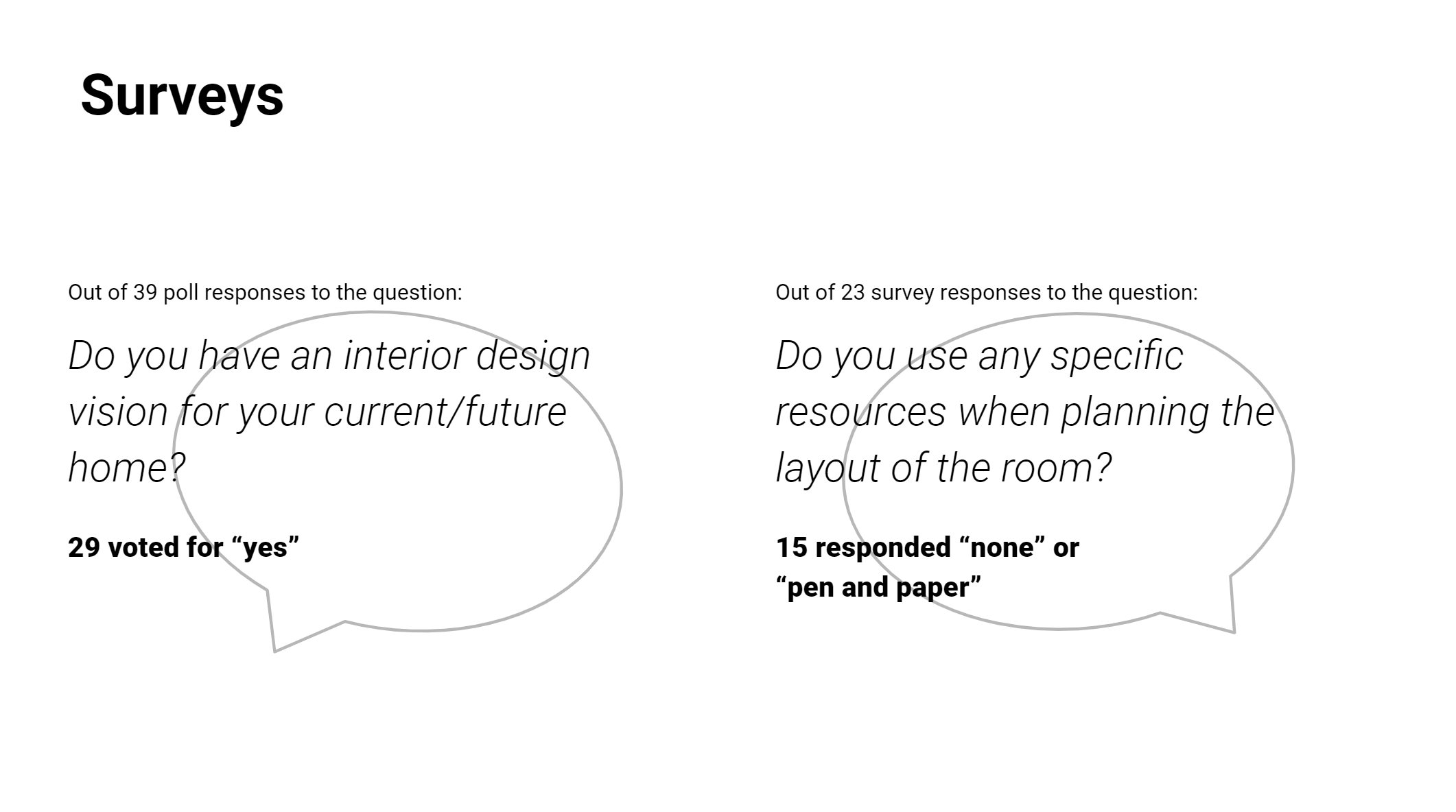
For our surveys, when asking if our users if the have a vision of their current or future home a majority of them indicated yes.
However, when asked if they use any specific resources, a majority of respondents said they only use “pen and paper” or “nothing” or its all in their head. The only software-based resources mentioned was a floor planning website, the IKEA AR app, and surprisingly the SIMS.
Using the main takeaways from the user research, we proceeded with creating the User Persona for our app: Elijah.
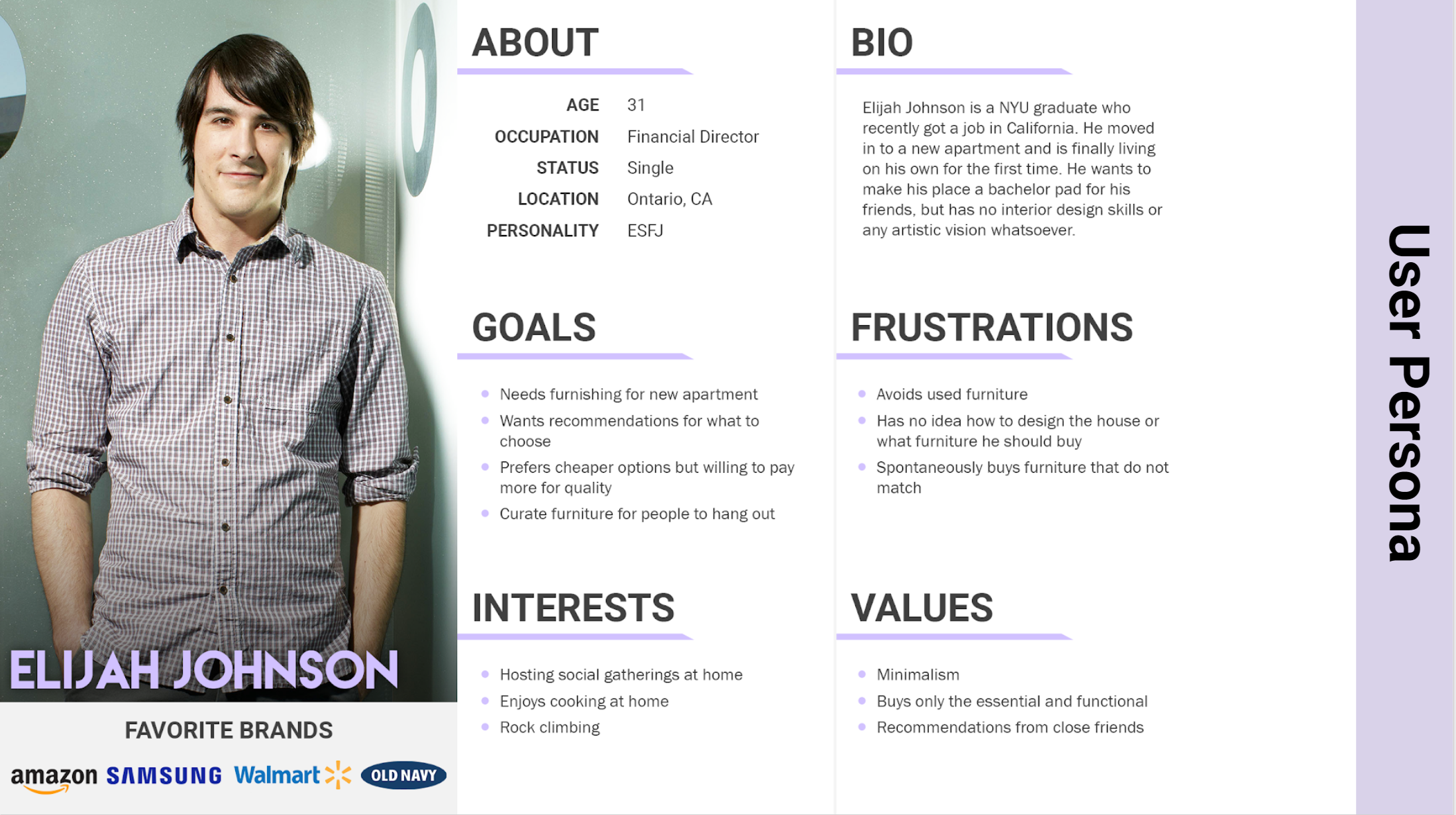
Elijah is moving into a new apartment and living on his own for the first time in his life. He knows that he desires a certain atmosphere for the place, but has no idea where or how to start planning.
To further empathisize with our user, we created a storyboard.
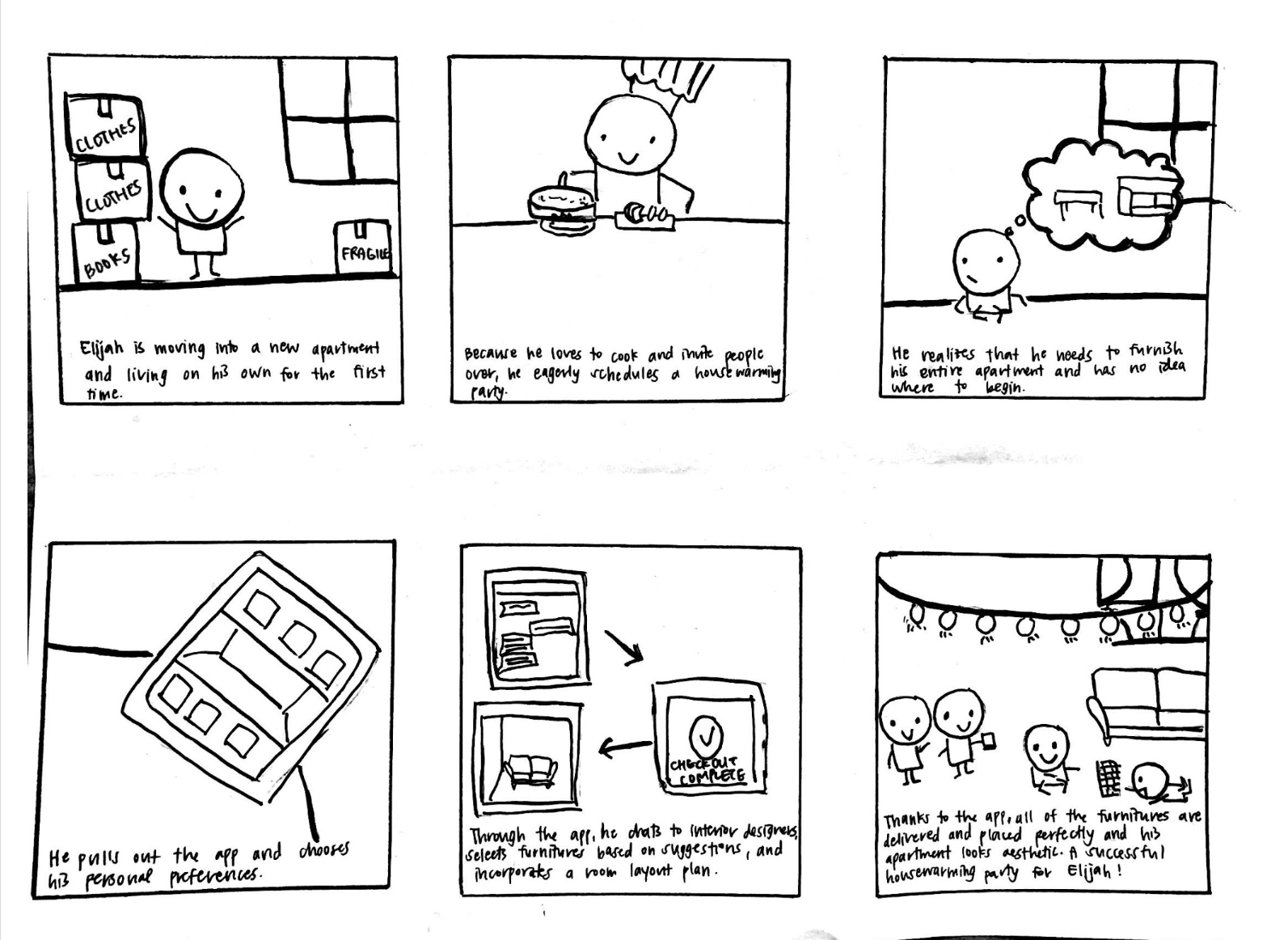
The storyboard demonstrates a situation that involves Elijah, who is living on his own for the first time.
In order to have a housewarming party, he realizes that he needs to furnish his entire apartment.
By using INHANCE, he incorporates a room layout plan based on furniture suggestions and chatting with interior designers.
Using all of the data we gathered, we created several iterations of the product before creating our final prototype.
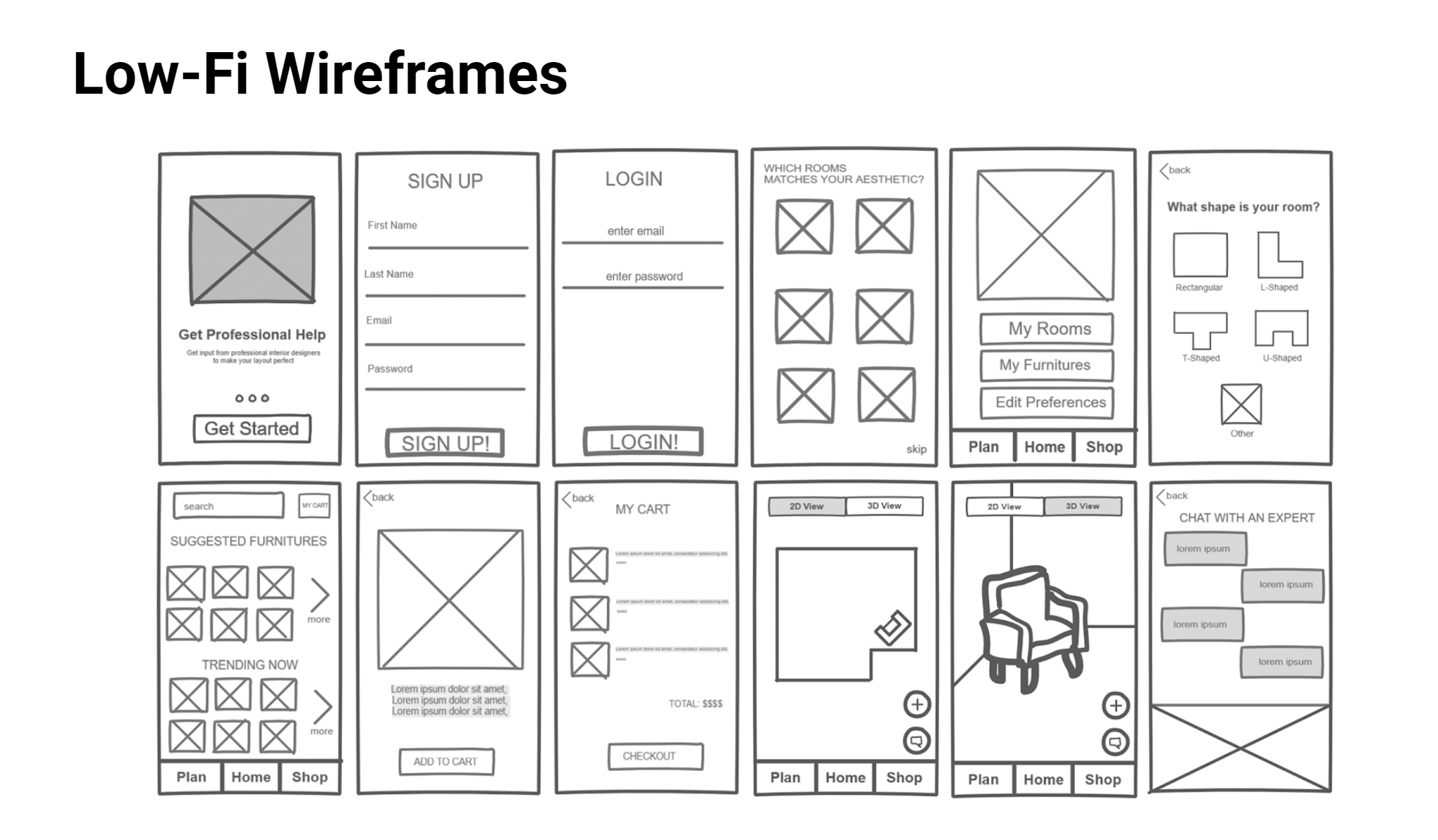
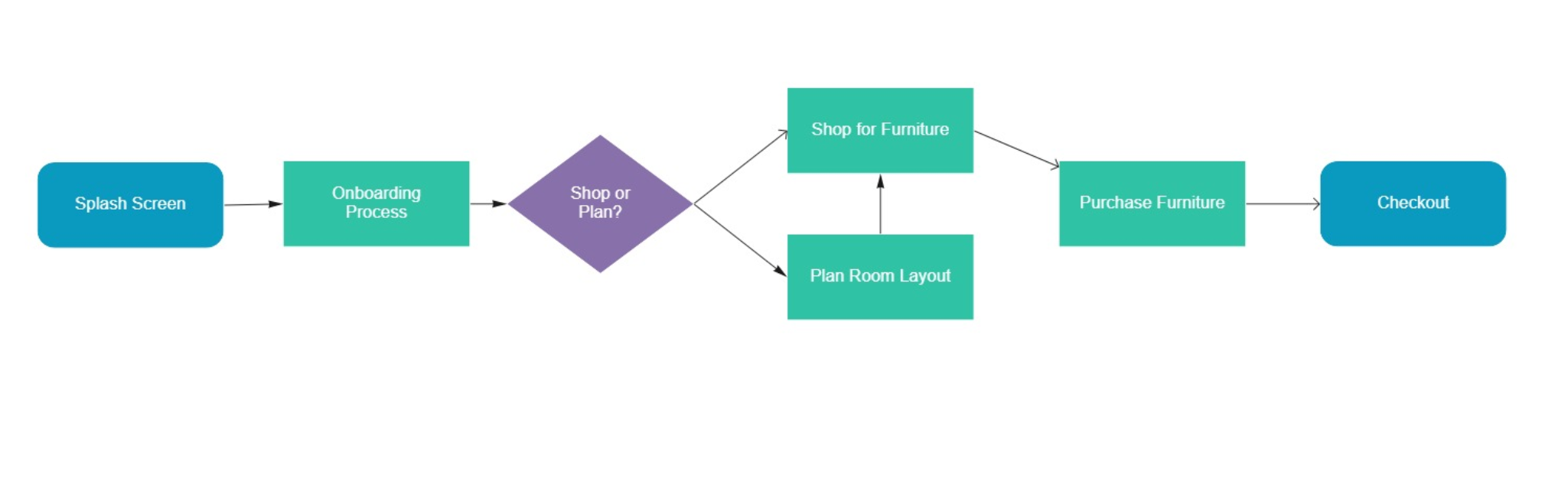
We initially had the floor planning and furniture shopping features segregated into two branches of the user flow.
However, we quickly realized that this user flow was extremely confusing.
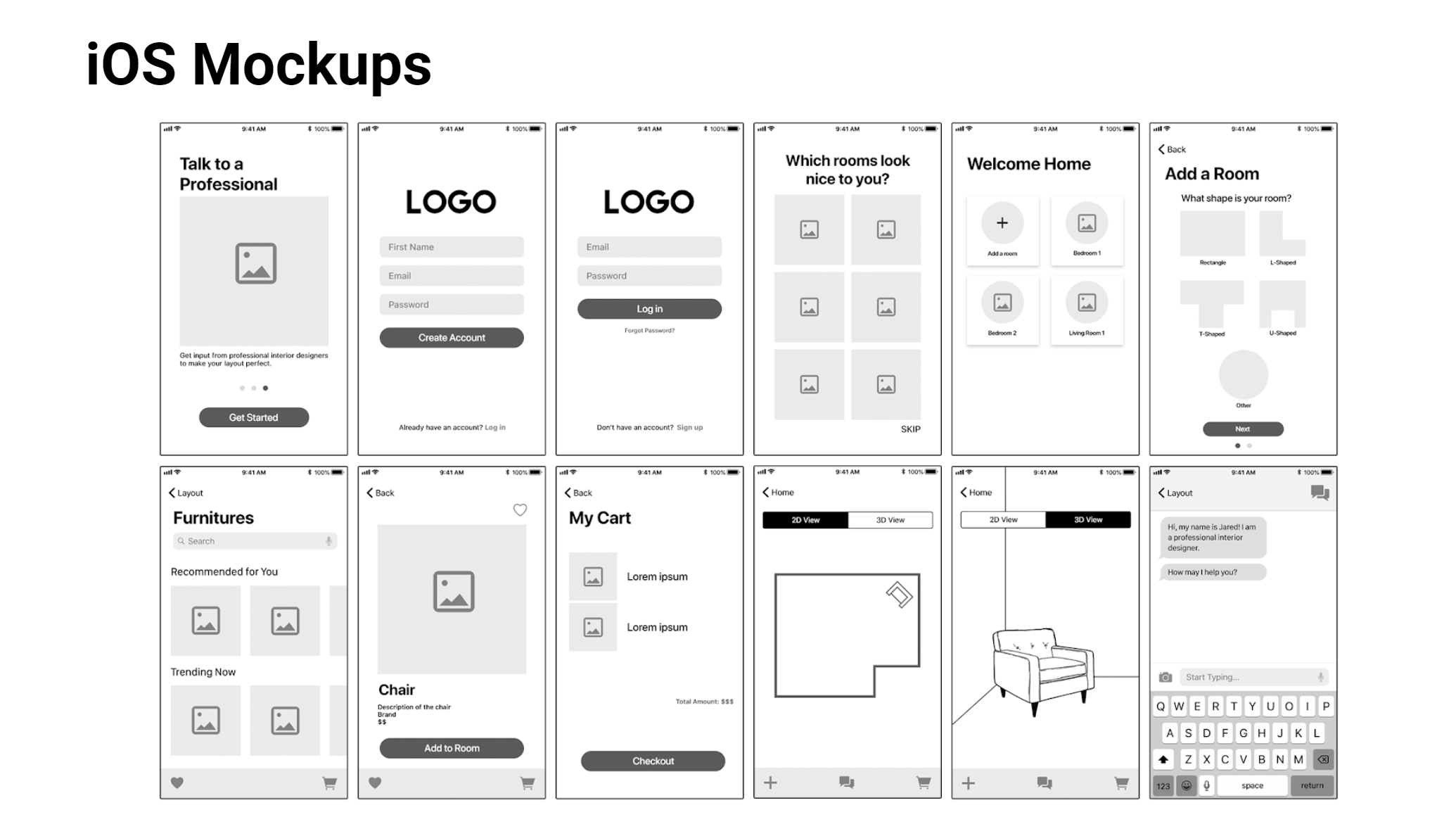
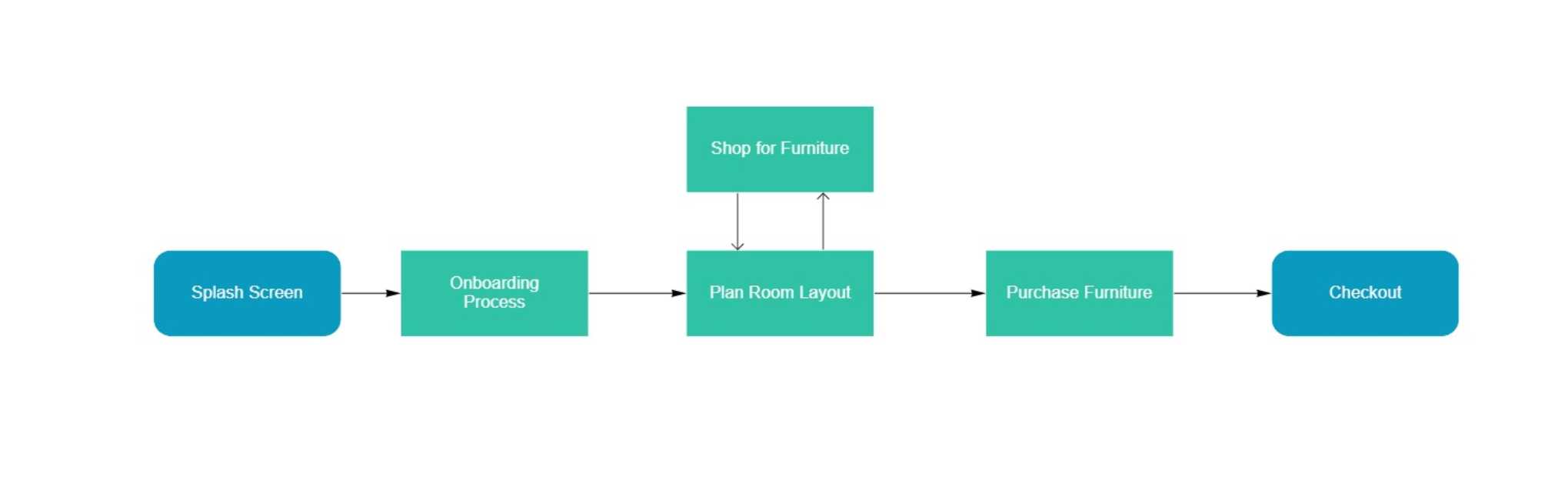
As a result, we decided to merge the two processes. While planning a room layout the user is also shopping for furniture, and after doing final edits they could the purchase the items they added to their rooms.
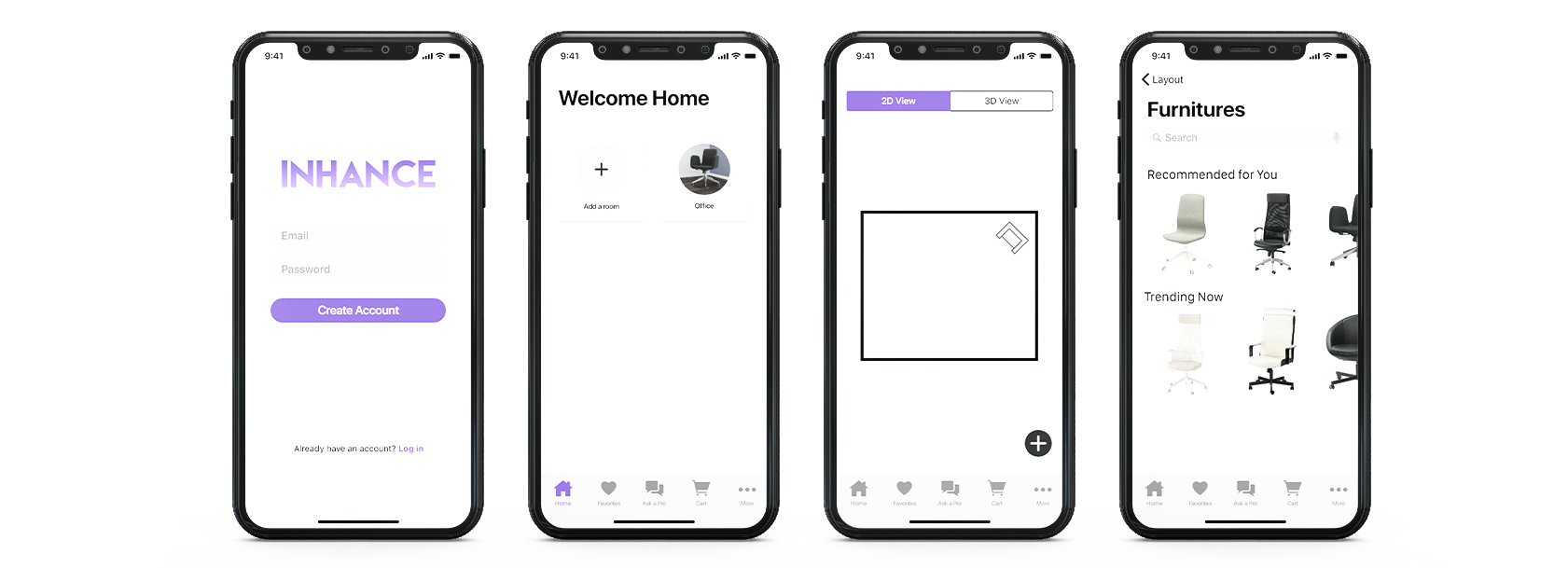
It is easy to assume that most people are similar to the way I think when in reality, it is the complete opposite. When we were brainstorming, we had no idea on how to develop Inhance. After receiving feedback from our research, it was easier to develop an app based on what the respondents need.
Constant improvements were constructed within various iterations. For instance, we created two user flows after figuring out that the first user flow was confusing after planning out the wireframes.
For the shop function of our app, developing a business plan with the various furniture shops is needed.
Through our competitive analysis, we addressed that using pen and paper is also a strong competition for the room layout portion. In order to further develop it as a useful component, we can incorporate 2D, 3D, and AR more seamlessly.
To fully utilize the overwhelming content of interior design, a desktop version would be helpful for people who prefer a more detailed outlook.